Supply chain resilience for defence and preparedness

Sustaining medical supply through disruption

NATO has highlighted that hybrid attacks on infrastructure and digital networks are becoming more frequent, a concern reflected in its latest Resilience Baseline Requirements.
These threats can compromise the availability and resupply of critical medical assets, compounded by simultaneous surges in demand that place severe pressure on strategic reserves and replenishment capacity.
How resilient is your strategic logistics planning against these escalating threats?

Building Supply Resilience

For defence and preparedness organisations, supply chain resilience involves sustaining the flow of critical medical supplies and trauma equipment to deployed units, field hospitals and strategic reserves during a crisis, and rapidly restoring replenishment capacity as operational conditions evolve.
Protecting medical readiness requires managing long-term structural risks, such as concentrated global production and reliance on digital ordering networks, alongside acute shocks including natural disasters, cyberattacks and hybrid threats to transport infrastructure.

Securing medical supply continuity under pressure centres on four strategic planning areas.

Visibility and early warning

Supply risks typically emerge well before actual product shortages occur.

Gradual increases in lead times, repeated delivery delays and declining supplier capacity signal growing pressure, even while stock levels appear stable.
Monitoring these indicators alongside stock and shipment status gives organisations time to assess risks and plan their response.
For defence and preparedness organisations, this requires tracking stock quantities, outstanding orders and expected delivery dates across central reserves, field medical facilities and deployed units.
Comparing this data with consumption forecasts and required reserve levels reveals potential shortfalls by product and location. These insights guide decisions on replenishment, stock reallocation and the activation of existing framework agreements or pre-qualified alternatives.
Internal stock and shipment records only provide a partial view.
A supplier may still fulfil current orders while raw material shortages, restricted production capacity or competing commitments threaten future deliveries. These pressures may remain invisible in internal records until delivery performance begins to deteriorate. Regular supplier dialogue and shared risk assessments reveal these upstream vulnerabilities.
Suppliers require credible demand forecasts and clear priorities to assess capacity against expected requirements and flag potential shortfalls. This two-way exchange of demand forecasts, capacity assessments and expected recovery timelines enables procurement and logistics teams to identify replenishment commitments at risk and determine where early intervention is needed before medical resupply is affected.
This end-to-end transparency provides the critical lead time needed to secure alternatives and protect medical readiness.

Flexibility and qualified product alternatives

A supply network optimised solely for routine operations becomes highly vulnerable during a crisis.

A shortage of a single medical consumable can delay the replenishment of trauma kits, first aid assemblies and modular medical systems across multiple deployments.
Substituting an item is rarely straightforward. The process involves carefully assessing its intended clinical use, technical specifications and any implications for kit configuration or personnel training. Qualifying alternatives in advance reduces this pressure during a shortage and supports a more strategic approach to supply diversification.
Early market dialogue is particularly valuable at this stage. It gives procurement teams the opportunity to explore a broader range of products and manufacturers, assess available production capacity and investigate dependencies between different supply sources.
A technically suitable product must also be available in sufficient quantities to meet replenishment requirements. Comparing reserve coverage and projected consumption against supplier lead times reveals whether a replacement can arrive before existing stocks become critically low. Sudden surges in demand narrow that window considerably.

Understanding these factors before selecting alternatives is essential for identifying substitutes that meet clinical requirements and genuinely reduce exposure to supply disruptions.
Strategic supply partners contribute to this preparation through technical documentation, proactive obsolescence management and established manufacturer relationships. They coordinate with manufacturers to clarify substitution requirements and with procurement and logistics functions to prepare the necessary adjustments to orders and replenishment arrangements.
With these steps agreed in advance, medical procurement teams can activate qualified alternatives more quickly, avoiding unnecessary reassessment during a shortage.

Coordination and decision-making

Managing competing demands requires clear decision authority across clinical, procurement and logistics functions.

A sudden surge in casualties or the simultaneous deployment of multiple units can create competing demands for critical medical supplies. An urgent request from one location may require stock already reserved for another. Redirecting these supplies relieves immediate pressure, but it also affects the reserves available for ongoing operations and future deployments.
Clinical urgency is central to allocation decisions, yet available stock, existing commitments and replenishment capacity must also be weighed.
Agreed priorities and escalation procedures establish who can authorise the release of reserves, revise allocations or redirect medical kits and consumables as operational needs change. Without this coordination, separate requests risk generating conflicting instructions and delays precisely as demand intensifies.

Established distribution networks strengthen this coordination by turning allocation decisions into rapid logistical execution. Through multi-site ordering controls, priority-based stock allocation and cross-border reallocation, supply partners help organisations assess available stock and revise replenishment schedules according to agreed priorities. Dedicated points of contact provide a direct channel for resolving conflicting requests and communicating changes before they affect deliveries.
Pre-agreed decision authority and coordinated logistics reduce delays in redirecting critical medical supplies to the units under greatest pressure.

Continuity under disruption

An alternative delivery route offers little protection if a warehouse outage prevents critical orders from being dispatched.

During high-intensity deployments, blocked transport corridors, damaged distribution hubs or regional infrastructure failures can abruptly interrupt medical resupply. Critical products may sit ready in stock yet fail to reach dispersed units and field medical facilities due to transit restrictions or depot outages.
Relying on a single central depot or primary corridor magnifies this risk. Even designated alternative routes may still pass through the same regional hubs, exposing seemingly separate delivery options to a single point of failure. Continuity planning must map these shared dependencies alongside reserve locations and alternative transport capacity.
Contingency planning cannot treat transport and warehouse disruptions as separate issues. Solving a transport blockage is only half the battle; a distribution centre outage can be even harder to work around. Without power or functioning IT systems, order processing and dispatch can grind to a halt, regardless of how many alternative carriers are waiting outside. Sustaining these operations requires safeguards such as backup power, redundant communications and manual fallback procedures to keep essential orders moving when digital systems fail.
Established distribution networks offer wider regional options, but their true value is tested during simultaneous disruptions. A secondary route is only effective if the facilities along it remain operational and can actually absorb the redirected volume.
Resilience has to hold up beyond the written contingency plan. Regular stress-testing and live rehearsals of these fallback procedures expose hidden vulnerabilities before a crisis hits. They also reveal whether priority medical deliveries can continue and disrupted supply flows can be restored before the original infrastructure is back in service.

Strengthening your medical supply strategy with Mediq

At Mediq, we integrate an extensive medical portfolio, specialist technical expertise and a structured European distribution network to align clinical requirements with logistical resilience.
For defence and emergency sectors, this structure expands sourcing alternatives, reduces single-point dependencies and reinforces the operational capacity required to sustain medical resupply under severe strain.

Greater control over your medical assortment

With more than 77,000 medical products, Mediq brings together leading international manufacturer brands and Mediq Select, our own-brand range. This extensive portfolio covers both specialised medical requirements and high-volume recurring procurement.
Our comprehensive portfolio covers core medical categories for Defence and Preparedness:
  • Massive haemorrhage control
  • Airway management
  • Respiratory support
  • Circulation and shock management
  • Hypothermia prevention and head injury
  • Trauma and wound care
  • CPR equipment
  • User protection and safety (PPE)
  • Hygiene and sanitation
  • Operational nutrition and supplements
  • This broad choice of products and manufacturers expands sourcing options and reduces dependence on individual supply sources. With agreed assortments, we maintain consistency across recurring procurement and medical reserve replenishment, without sacrificing the flexibility needed for different operational requirements.

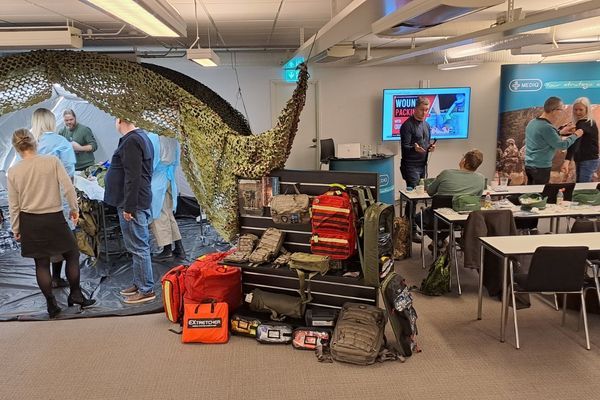
    Our Showroom & Strategic Knowledge Hub takes this selection beyond the catalogue. Through tailored showroom visits, expert consultancy and realistic product testing sessions, procurement and medical leads can explore emerging solutions and evaluate products side by side. Early product evaluation supports the qualification of alternatives, expanding sourcing flexibility and strengthening the resilience of your medical supply plan.

    Structured response under disruption

    End-to-end visibility: A resilient medical supply strategy requires visibility over product availability, stock locations, open orders and shipment status. At Mediq, we integrate this information with proactive supplier monitoring and demand planning to anticipate potential shortages, assess reserve requirements and establish clear replenishment priorities.
    European operational scale: Mediq operates in 13 European countries and manages more than one million order lines every month for over 5,000 institutional customers. This operational scale is supported by regional sourcing, long-standing supplier relationships and cross-border distribution. Together, these capabilities provide alternative transport options and the capacity to reallocate stock across our network during disruptions.
    Proactive risk management: Risk and vulnerability assessments form part of our supply planning, guiding contingency measures for transport disruptions, warehouse failures and sudden surges in demand. In crisis conditions, our logistics infrastructure allows us to adapt distribution routes, redirect available stock and coordinate deliveries according to agreed operational priorities.
    Specialist support: Throughout this process, our specialists on standby work alongside your teams to support product selection in line with your operational requirements, provide technical input on qualified substitutes and establish customised replenishment models.
    Combined with our extensive medical portfolio, these capabilities reinforce your strategic supply planning with broader sourcing options, greater operational control and the logistics capacity to sustain medical resupply under strain.

    Explore more news and articles

    Inspiration for setting up healthcare kits and solutions, specialist interviews, articles, market innovations and our latest updates.

    Plan for sustained medical readiness

    Connect with our specialists to assess product options against your operational requirements and build a resilient supply strategy.

    Experience our Showroom & Strategic Knowledge Hub
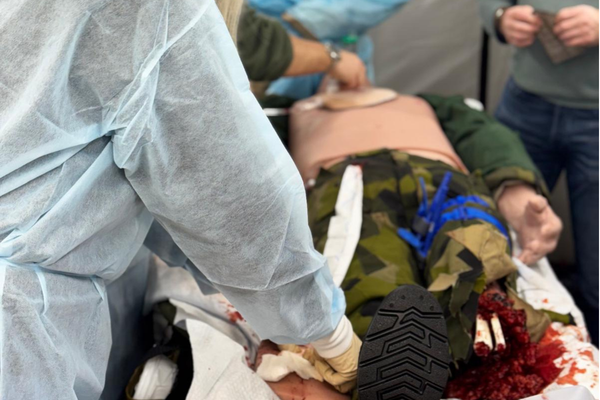
    Combine realistic product testing, immersive consultancy, and direct engagement with specialists, focused on your kit and solution customisation needs.